Why the drawing is usually missing
Three situations account for almost all of it. The part was custom when the equipment was built and nothing was ever filed. The manufacturer has stopped supporting the machine and the documentation went with them. Or the drawing exists somewhere in a cabinet nobody can find while the line is down.
None of those stop the part being made. They change how it starts.
What to send, in order of usefulness
- The broken part itself. Nothing beats having the object. A shop can measure it, check where it failed and see the wear pattern that explains why.
- A photograph with a scale reference. Put a tape measure, a ruler or a known object in the frame, in the same plane as the part. A photo without scale is a shape with no size.
- Two or three key dimensions. Overall length, the hole pattern, the thickness of the material. These let a shop sanity-check whatever it derives from the photograph.
- A photograph of where it fits. Often more useful than the part. It shows the clearances and the mating surfaces that decide whether a replacement will actually go in.
| What you send | How useful | What it lets a shop do |
|---|---|---|
| The broken part itself | Best | Measure directly, read the wear pattern, identify the material, see how it failed |
| Photo with a scale reference | Very good | Derive geometry and size, usually enough to quote |
| Photo of where it fits | Very good | Check clearances and mating surfaces, which is where fit problems come from |
| Two or three key dimensions | Good | Sanity-check whatever is derived from photographs |
| Photo with no scale reference | Limited | Identify the type of part and little else |
| A verbal description alone | Poor | Ask you for a photograph |
How a shop works back from a broken original
The first job is deciding what the part has to do rather than exactly what it looked like. A bracket that cracked at a weld does not want to be reproduced faithfully. It wants to be reproduced with more material where it failed.
That is the quiet advantage of reverse engineering over ordering a replacement. The original is evidence. A part that failed once in a specific place will usually fail there again, and a shop that looks at the fracture can put steel where the load actually is.
From there it is measurement, material selection, and a decision about whether to model it first.
How to photograph a part properly
A tape measure, a ruler or a coin, in the same plane as the part. Not behind it and not in front of it.
Angled shots distort proportions and make derived dimensions wrong.
Where and how it failed is the most useful single piece of information you can send.
Clearances and mating surfaces decide whether a replacement will actually go in.
A dark photo of a dark part in a dark shop tells nobody anything. Use the flash.
The broken part is not just a template. It is a failure report.
When modeling first is worth it
Drawing the part in CAD before cutting steel adds a step, and on simple parts it is not worth it. On three kinds of job it usually is.
Parts that are expensive in material, where a mistake means buying the plate twice.
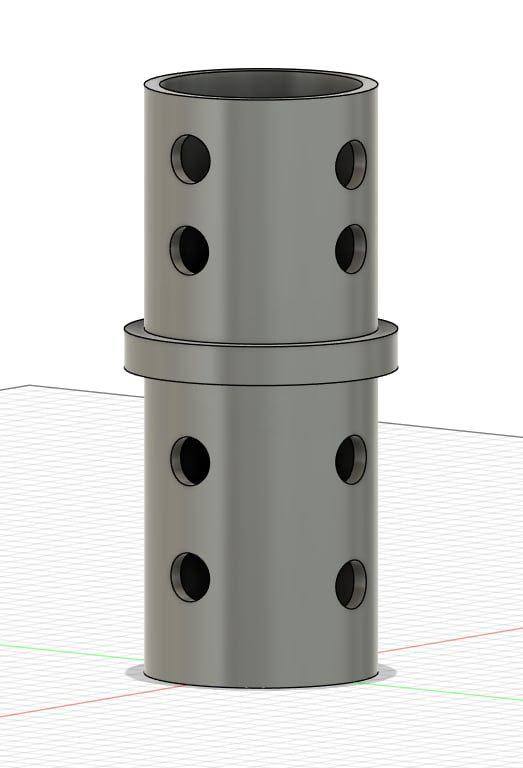
Parts that have to fit into something that cannot come to the shop, where a printed check piece can be carried to the machine and offered up before anything is committed.
Parts you will need again. Once it exists as a model, the second one is not a second reverse engineering job.
Printing a check piece is not a technology flourish. It is a way of finding the mistake on a screen or in a cheap polymer part rather than in finished steel.
What to expect back
A shop should be able to tell you fairly quickly whether the part is straightforward, whether it needs modeling, and what the material choice does to the price. If a shop cannot tell you which of those it is, that is worth noticing.
You should also expect to be told when reproducing the original is the wrong answer. Sometimes the honest response is that the part failed because it was underspecified to begin with.
Reading the failure before copying the shape
There is a habit worth unlearning, which is treating a broken part as a shape to be duplicated. The more useful reading is that it is a record of a load the part could not carry.
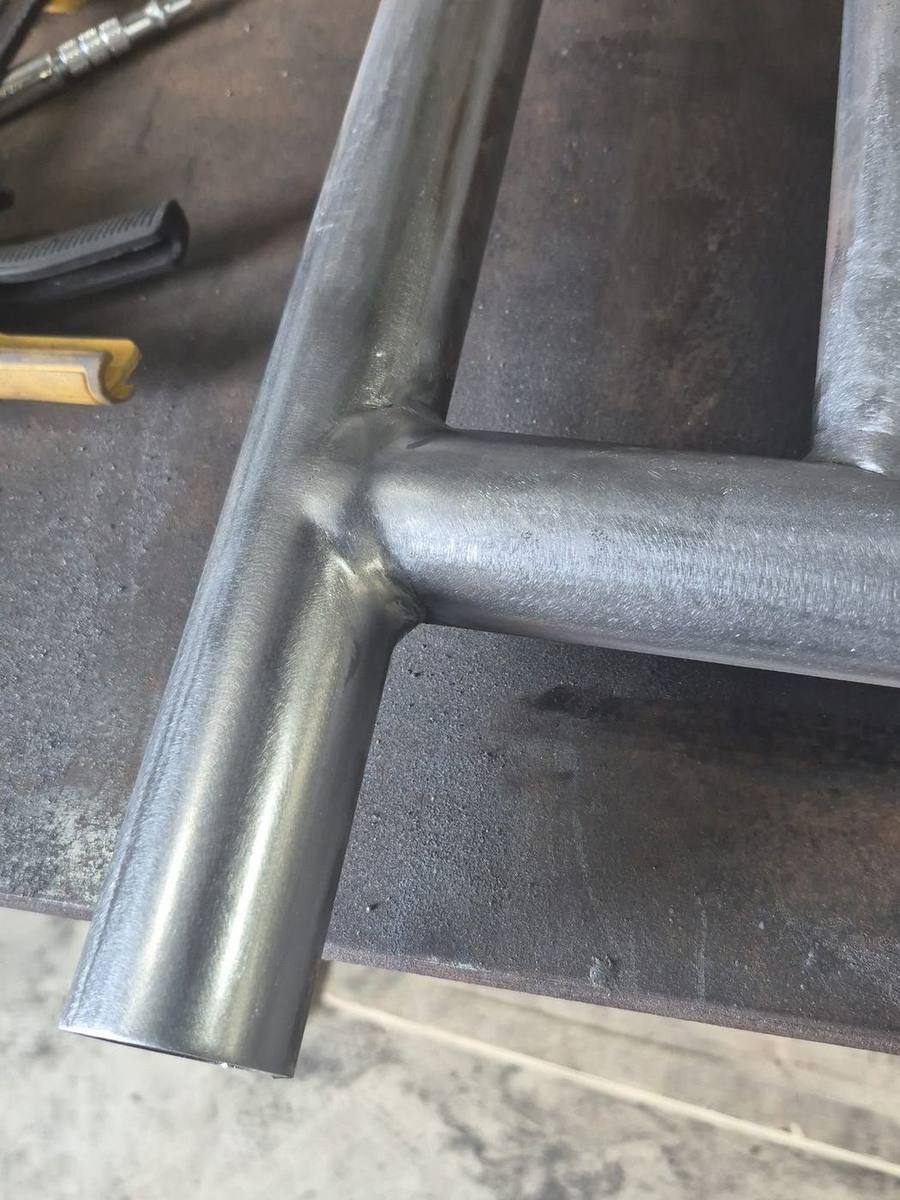
A crack that starts at a weld toe usually means the weld was the stiffness change, and the answer is to move or spread that transition rather than to lay the same weld again.
A part worn through on one side means it was loaded off center, which points at alignment or at a mount rather than at the part.
A fastener hole elongated into a slot means the joint was moving. Replacing the part without addressing the movement produces the same slot again.
This is the argument for describing what the part was doing when it failed. A fabricator who knows the duty can build for it. A fabricator who only has the shape can only give you the same part again.
Material identification without a lab
For most job shop work, the material can be narrowed down well enough from the part itself. Weight, magnetic response, the color of the machined surface, how it corroded and where it was used all narrow the field quickly.
Carbon steel is magnetic and rusts red. Most stainless used in fabrication is weakly magnetic or not magnetic and does not rust that way. Aluminum is light, non-magnetic and forms a dull gray oxide rather than flaking.
That is usually enough to choose a sensible replacement. Where it is not enough, the honest answer is that the part needs proper identification, and a shop should say so rather than guess.
It is also worth asking whether the original material was right. A part that has failed repeatedly is sometimes a material problem rather than a geometry problem.
When the answer is not to remake it at all
A shop worth using will occasionally tell you that reverse engineering is the wrong route.
If the part is a standard component that is still manufactured, buying it is faster and cheaper. If it is a safety-critical certified item, a shop-made copy may not be acceptable regardless of quality. If the assembly around it is at the end of its life, a new part in an old machine is money spent in front of a replacement.
Being told this costs a shop the job and saves you the money, which is a reasonable test of who you are dealing with.
Standards and further reading