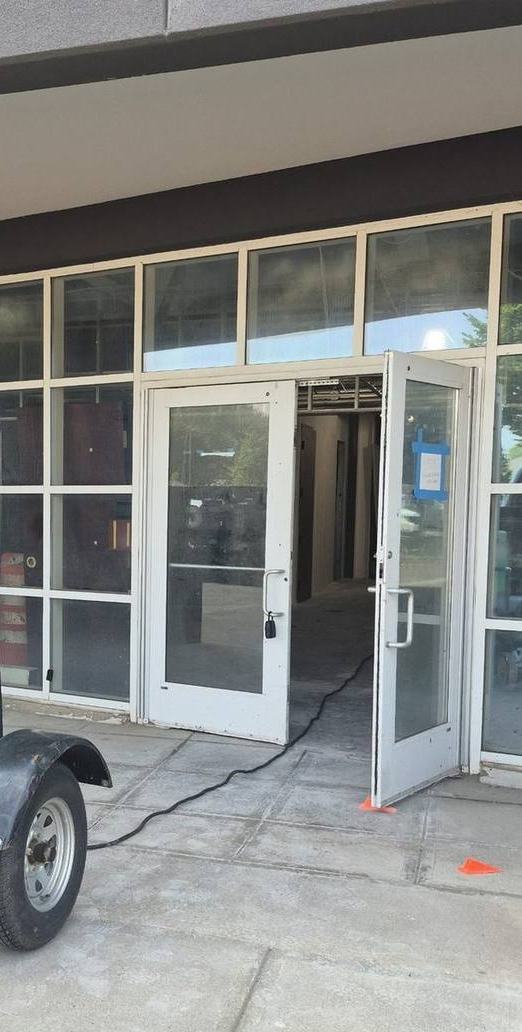
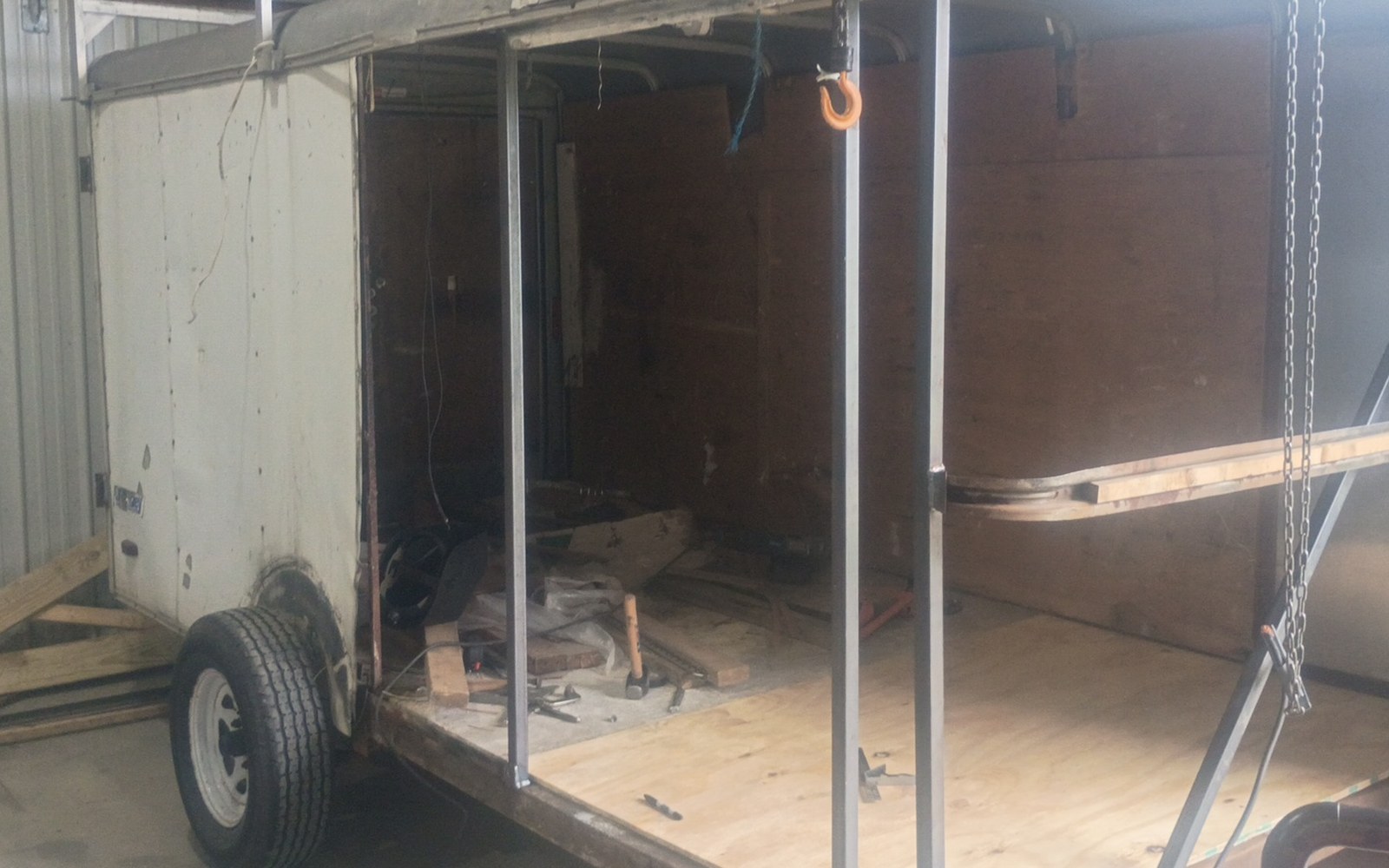
Measure the real condition, not the drawing
Plants get modified. A line installed twenty years ago has been repaired, extended and worked around, and the drawing set records the intention rather than the result.
Every hour spent measuring the actual condition before the window opens buys back several inside it. Anything being replaced, tied into or mounted onto should be measured in place, not taken from a drawing, and photographed while somebody can still walk up to it.
This is the difference between a fabricated part arriving ready to bolt on and a fabricated part arriving needing to be modified on a Saturday night.
Separate what must happen in the window from what does not
Shutdown time is the most expensive time you will buy all year, and a surprising amount of what gets scheduled into it does not need to be there.
Anything that can be fabricated ahead should be. Spool pieces, brackets, guards, platforms, bases. Building them beforehand converts shutdown hours into shop hours, and shop hours are cheaper, better lit and better equipped.
The reverse is also worth checking. Some work only becomes possible once the machine is open, and pretending otherwise moves the discovery later rather than removing it.
| Phase | What it covers | Can it move out of the window? |
|---|---|---|
| Isolation and make-safe | Lockout, draining, purging, permits | No |
| Demolition and removal | Getting the old equipment or pipework out | Rarely |
| Fabrication of new parts | Bases, brackets, spools, guards, platforms | Yes, and it almost always should |
| Installation and alignment | Setting, shimming, anchoring, aligning | No |
| Tie-ins and connections | Welding into existing services | No |
| Surface preparation and coating | Blasting, priming, coating and cure time | Usually, if the part is made ahead |
| Discovery and rework | The thing nobody planned for | No, so budget for it |
Give fabrication a real lead time
Custom parts have a lead time whether or not the schedule acknowledges it. Material has to be sourced, cut, welded, machined and often coated, and coating in particular has cure times that no amount of urgency shortens.
The pattern that causes trouble is a part identified during the shutdown itself. At that point every hour of fabrication is an hour of downtime, and the choice becomes a fast compromise or an extended window.
If there is any doubt about whether a part will be needed, it is usually cheaper to have it made than to find out during the outage.
Before the window opens
Not the drawing. Measure what is actually there, and photograph it while somebody can still walk up to it.
Fabricate ahead, coat ahead, stage materials ahead.
Material sourcing and coating cure are the two that quietly consume a schedule.
In writing, before the day, not at seven in the morning during it.
Scheduling to the last hour guarantees an overrun the first time anything is discovered.
A number that reaches a voicemail box until Monday is not a contingency plan.
Sequence the trades so they are not waiting on each other
A common failure is three contractors on site, each blocked by another, all billing. Millwrights waiting on a base that has not been fabricated. Fabricators waiting on demolition. Electricians waiting on both.
Sequencing is easier when fewer companies are involved, which is the practical argument for a shop that covers several trades. It is one schedule to hold rather than three to reconcile.
Where multiple contractors are unavoidable, agree the handover points explicitly and in writing before the window rather than at seven in the morning on the day.
 Stock
StockPlan for the discovery, because there will be one
Every shutdown finds something. Corrosion under lagging, a foundation that has cracked, a fastener pattern that does not match the drawing, a part that has been repaired badly at some point in the past.
The plants that finish on time are not the ones that avoid discoveries. They are the ones that budgeted hours for them and have somebody on site who can fabricate a response rather than order one.
Two practical measures. Hold back a portion of the window rather than scheduling to the last hour. And confirm that at least one contractor on site can make a part, not only fit one.
Plants that finish on time are not the ones that avoid discoveries. They are the ones that budgeted for them.
Know who is reachable at three in the morning
Shutdowns run at night and over weekends, which is exactly when most suppliers are closed.
Before the window opens, establish who actually answers outside business hours and what they can do when they answer. A phone number that reaches a voicemail box until Monday is not a contingency plan.
Why the drawing and the plant disagree
It is worth understanding why measurement beforehand pays so reliably, because it is not a criticism of anyone's record keeping.
A drawing records the intent at the moment of design. What gets built differs from it in small ways during construction. Then the plant runs for years, and every repair, extension, temporary fix and work-around modifies it further, usually without anyone updating the drawing set.
By the time a shutdown comes around, the drawing is a reasonable guide to where things roughly are and an unreliable guide to any specific dimension.
This is why a fabricated part built from a drawing frequently needs modification on site, and why a fabricated part built from a field measurement usually does not.
Staging and lay-down, the unglamorous cost
Work stops for reasons that have nothing to do with skill. Material is on the wrong side of the site. The lifting equipment is booked elsewhere. The new part is on a truck that has not arrived. There is nowhere to put the old assembly once it comes out.
Staging solves most of this and costs almost nothing to plan. Materials, tools and fabricated parts positioned as close to the work as fire and access rules allow, before the window opens.
Lay-down space for what comes out matters just as much. A removed assembly that has nowhere to go blocks the route for everything that comes next.
The debrief that makes the next one cheaper
The last hour of a shutdown is the most valuable hour for the next one, and it is almost always skipped because everybody is tired.
Three questions are enough. What did we discover that we could have known beforehand? Which task took materially longer than planned, and why? What do we now know about the installed condition that should be recorded?
Write the answers down and attach photographs. Two years later, that document is worth more than the drawing set.
Standards and further reading