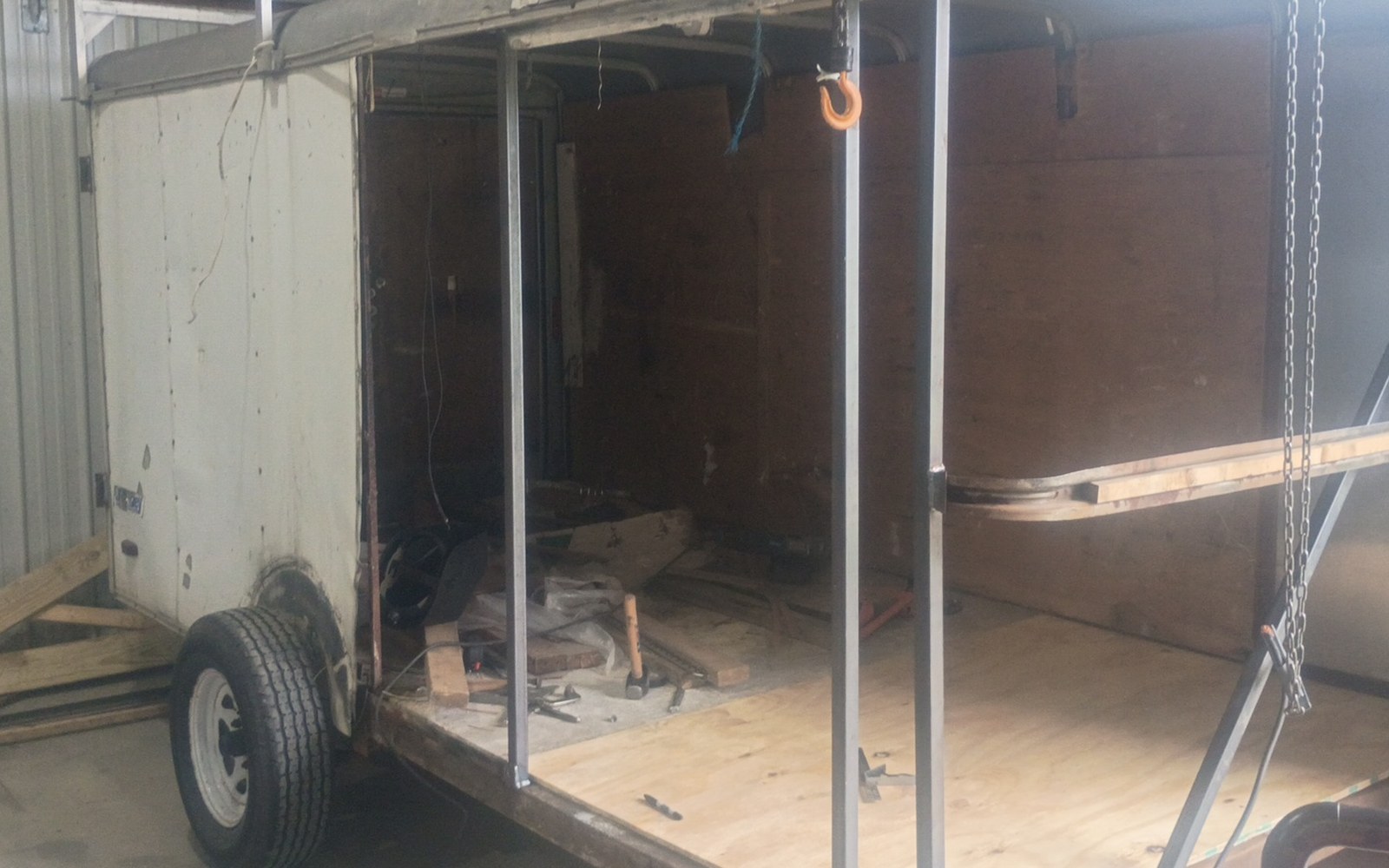
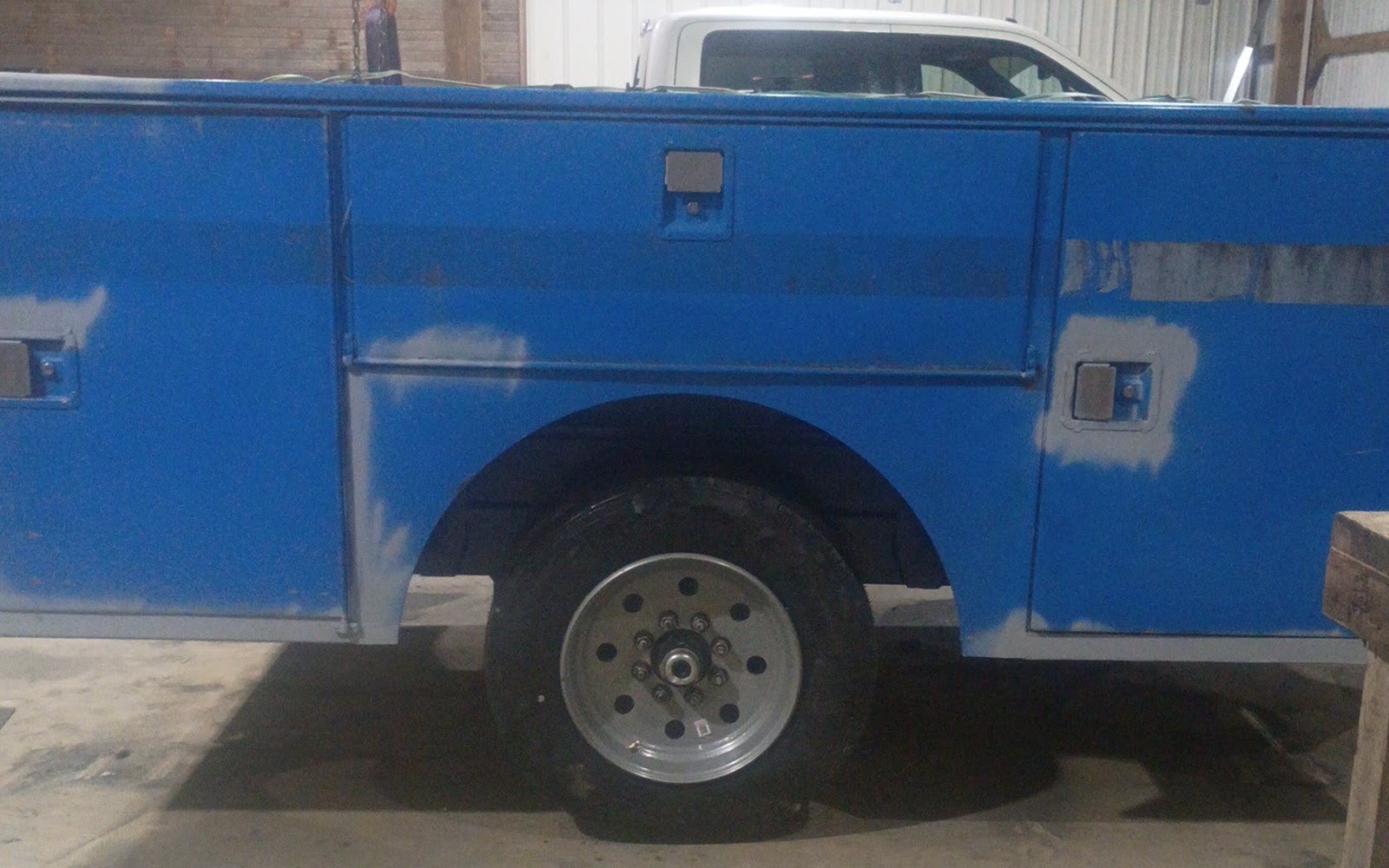
Why bodies and chassis age differently
A service body lives a harder life than the truck under it. It carries salt, standing water in compartment floors, tools dropped into it and loads it was never specified for. The chassis meanwhile is being maintained on a schedule.
The result is a common situation: a mechanically sound truck with a body that looks finished. Replacing the whole unit solves it and is very rarely the cheapest way to.
What fabrication recovers well
Compartment floors and lower panels. These rust first because they hold water, and they are usually straightforward to cut back to sound metal and replace.
Cracks at stress points on dump bodies, hoist mounts and hinge areas. These are fatigue failures, and repairing them with more material than the original had usually outlasts the first build.
Decks, skirts and racks. Often these are not repairs at all but modifications, because the truck now carries something it was not built for.
Doors, latches and mounting hardware, which are wear items rather than structural failures.
Replacing the whole unit is the simple answer. It is very rarely the cheapest one.
What should make you cautious
The mounting points where the body meets the frame. If those have gone, the repair is significantly larger than it looks from outside.
The main longitudinal rails of the body structure. Surface rust is one thing. Section loss in a load-carrying member is another.
Widespread perforation rather than localized failure. A body rusted through in one area is a repair. A body rusted through everywhere means there is not enough sound metal left to build back onto.
Previous repairs done badly. Plate welded over rust without cutting it out is common, and it means the actual condition is worse than the surface suggests.
| Area | Typical condition | Read |
|---|---|---|
| Compartment floors | Rusted through where water sits | Repair. Cut back to sound metal and replace. |
| Lower panels and skirts | Perforated along the bottom edge | Repair, and usually an improvement on the original detail. |
| Hoist and hinge mounts | Cracked at stress points | Repair, with more material than the original had. |
| Decks and racks | Not failed, just wrong for what the truck now carries | Modification, not repair. |
| Body-to-frame mounts | Section loss or movement | Caution. Significantly larger job than it looks from outside. |
| Main longitudinal rails | Section loss rather than surface rust | Caution. This is structure. |
| Whole body | Perforated in many places at once | Replace. Not enough sound metal to build onto. |
How to make the decision honestly
Get the body looked at with the intention of finding the worst of it rather than confirming the best. Ask specifically about the mounts and the rails, because those are the two things that turn a manageable job into a large one.
Compare against the real cost of replacement, which includes the new body, the transfer of equipment, and the truck being out of service while it happens.
Then ask how long the rebuild is expected to last. A repair that buys two years on a truck you plan to run for six is a different decision from one that buys ten.
How to inspect before you decide
Mounts and rails are where the decision is made, and neither is visible from the curb.
Surface rust and section loss look similar under paint. A screwdriver settles it.
Plate welded over rust without cutting it out is common and means the real condition is worse than it appears.
One or two localized areas is a repair. Failures in many unrelated places is a pattern.
Include the new body, transferring equipment across, and the truck being off the road while it happens.
A repair buying two years on a truck you will run for six is a different decision from one buying ten.
Do not skip the preparation
The most common way a rebuilt body disappoints is not a failed weld. It is new metal coated over old rust.
If the surface is not properly prepared before finishing, corrosion continues underneath and reappears within a season. Blasting is not the optional part of the job. It is the part that decides how long the rest of it lasts.
This is worth asking about explicitly when comparing quotes, because it is the easiest line for a cheaper quote to have left out.
 Stock
StockWhen replacement is the right call
There is a point where continuing to spend is not thrift. If the structure is gone at the mounts, if the sound metal remaining will not carry a repair, or if the truck itself is near the end of its service life, a rebuild spends money in front of a replacement you were always going to buy.
A shop worth using will tell you that rather than take the work.
Why bodies rot from the inside out
Understanding the mechanism explains why the visible rust is never the whole story.
Compartment floors and lower panels hold water. Road salt keeps that water conductive through winter. The inside face of the panel is usually uncoated or poorly coated, because it was hard to reach during the original build.
So corrosion starts on the face nobody sees and works outward. By the time it shows on the paint, the section behind it has been going for a while.
This is why a body that looks serviceable from three feet away can be perforated, and why probing rather than looking is the only reliable inspection.
Weight, payload and why aluminum enters the conversation
On a rebuild there is a genuine choice to be made about material, and it is worth making deliberately rather than defaulting to what was there.
Every pound of body structure is a pound of payload the truck cannot carry, on every trip, for the rest of its life. On a vehicle running near its rated capacity that compounds into real money.
Aluminum saves weight and does not rust, at a higher material cost and with less tolerance for impact. Steel takes abuse better and costs less to buy.
Frequently the right answer is a combination: steel where the body takes hits and carries structural load, aluminum for panels, decks and skirts where weight and corrosion dominate. That is a conversation worth having at the start of a rebuild rather than after it.
What to send to get a useful number
Vehicle work quotes better from photographs than from description, because the condition is visible and the description usually is not.
- A wide shot of the whole body , both sides, so a shop can see whether failure is localized or general.
- Close shots of each failed area , with something for scale.
- Photographs from underneath if you can get them safely, showing the mounts and the rails.
- Whether the truck can be left , or has to keep working between visits. This changes how the work is staged and therefore what it costs.
Standards and further reading